Wounds and Sutures
and other stories

What am I, if not the sum of my wounds, and the closing and re-opening of them?
My life is not centred around pain, not anymore; although the more years I spend alive, the more it accumulates in my body like something with weight. Gravity, perhaps. Is that why old people get so small?
My father is shorter than me now, has been for many years; but somehow, despite being almost twice my age, seems less weighed down. Less … damaged. Next to his well-preserved citadel, I feel like a coastal town wrecked by storm after wild storm until I become wild myself.
I know my father well enough. He is more of an analyst than an artist. He is mostly even-tempered, and has never once raised his voice at me. He gets angry like an electric kettle. One that’s rarely used, if you’ll forgive my imperfect analogy. His anger is contained and over quickly, but be careful not to overfill, and don’t pour carelessly.
We have had a grand total of two arguments—one last autumn and one the summer before. I don’t know his secret, but he just doesn’t wreck easily. And he’s good at picking himself up again.
At some point in my thirties we became friends. He respects me, and I seek out his advice. He has told me his regrets. He has apologised, and I have tried to make up for disappearing on him in my college years by scheduling regular calls, especially since I have moved oceans away again. I suppose every parent expects that wound: the one where their fledglings fly the coop—or if you’re lucky, the nest—
(when I search ‘coop vs nest’, I get results comparing pillows to buy. Every day I mourn the death of the wild within us)
—as I was saying, I believe they expect it. I believe some are pierced by that wound more keenly than others. I believe my father’s attitude was as it is with many things: Isn’t that just life? I think it’s part of how he’s survived his wounds so far, and I have slowly learned it from him and from the living of my own life.
He would phone and I would be too busy to pick up. He would write and I would forget to reply. I still haven’t forgiven myself my heartlessness, but I, too, have told him my regrets.
What is the difference between a regret and a wound?
They both register as pain and they both linger.
Maybe a regret is a type of wound, just as memory can be.
[insert woozy crossfade soundtracked by that watery, descending scale from Saint-Saëns’ Aquarium]
One night, there was a typhoon. I was old enough to have held a boy’s hand or two; my little sister wasn’t. The wind was howling outside and inside all at once. There was a terror in our home—one that came every day in those relentless years we were left alone with her.
Dad was at the office past dinner, as usual. May (not her real name) left a voicemail on his machine, not for the first time. To this day, we don’t know if he listened to any of them.
May believes he did. He claimed for many years, despite my pressing, that he didn’t know. I am sure we called him into “secret” meetings, detailing the horrors of that week in low voices. But memories take on a film-like quality the older you get.
I don’t know if she told him our plan to run away that night. We lived up a hill near a beach, and agreed that the lifeguard hut would make good shelter. It wasn’t the only time we dreamt of escape. Years before that, we would play a make believe story that is as real to me today as it was when we first played it.
May and I shared a room then. And in the gap between our pink and grey loft beds and our long, narrow homework desk, we transformed ourselves into two princesses fleeing the keep.
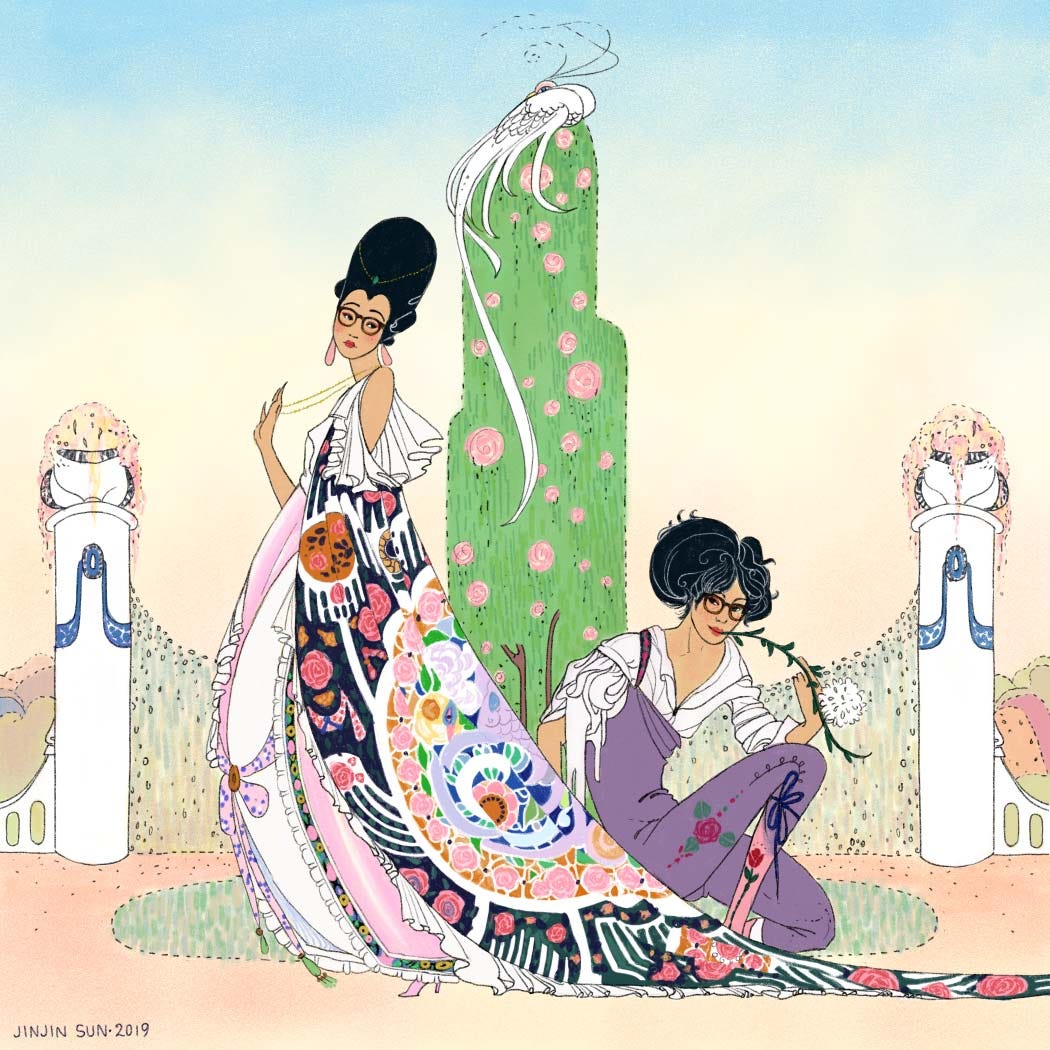
If you know me beyond my writing here, you’ll know I have a brain like a sieve. But I remember, clear as a full moon, the long, pine green floral skirt I wore that night, and the see-through pink plastic jewellery box we emptied and turned into a lantern. It was dark in the woods, as any fairytale will tell you. And escape is best carried out under cover of darkness, as any person knows.
Then and now, stories have been my escape and my salve.
In some ways, my little sister was also my salve in the way of salvation. In the way of co-conspirator. I actually started writing this piece thinking of estrangement, though she and I are not estranged. But she is chronically ill, and has limited energy to reply to texts or natter on the phone. It lights up my life when I hear from her, which isn’t often, but we do the best we can with the grief we are allotted.
I suppose that brings us back to where I began: the wound. And the beginning before I began: estrangement. And its fraternal twin, abandonment.
One of them is a choice to make, remake and be remade by. It is a choice that liberates, though not without cost or wounding. Maybe more like a skin condition than a wound. The kind that resurfaces and causes periodic distress, but isn’t some constant, festering sore. Whatever the metaphor, there is an element of agency and closure that feels distinct, at least in my body, from abandonment. The latter is still a choice; but one that is typically made with less intentionality.
And talked about more in the context of the wounded than the wounder.
I can imagine that being on the receiving end of estrangement can feel like abandonment. Undeserved, too, I’m sure.
I learned recently that there are many different forms of abandonment. You’d think I already knew that, as most of us probably do. But there is a crystallisation—that is, a physical change—that occurs when you name things.
Since reading about them, I’ve become more conscious of the various kinds of wounds I and others carry with us into relationships, intimate or not, and on our journeys through time and space.
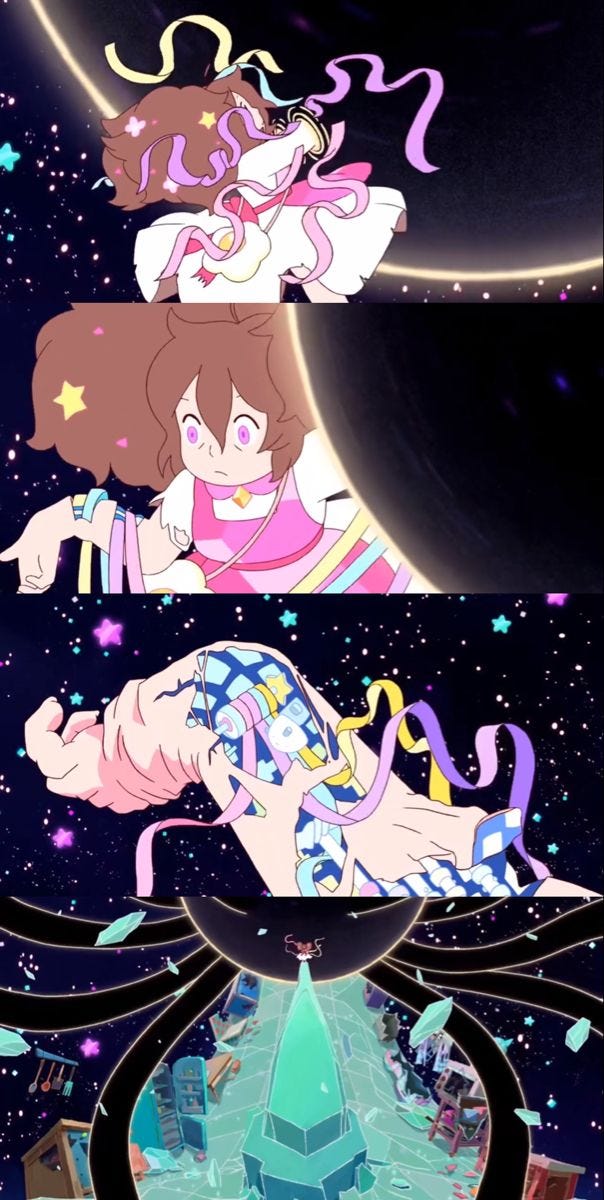
In my head I’m imagining intergalactic travellers like Bee or PuppyCat or Steven Universe and the Crystal Gems.
Somehow we’re back at stories again.
In this particular one, a character named Bee has her arm broken open when she tries to save her new friend from being sucked into a malevolent space-vortex. When she’s back home, she sticks her arm into something called the Dad Box—
(long story short, Bee’s dad made her a music box so she would never be lonely on her birthday. Every year, it sings her happy birthday in his voice, and dispenses candy as a gift. It also repairs her injuries)
—and tiny colourful robot arms get to work fixing her up.
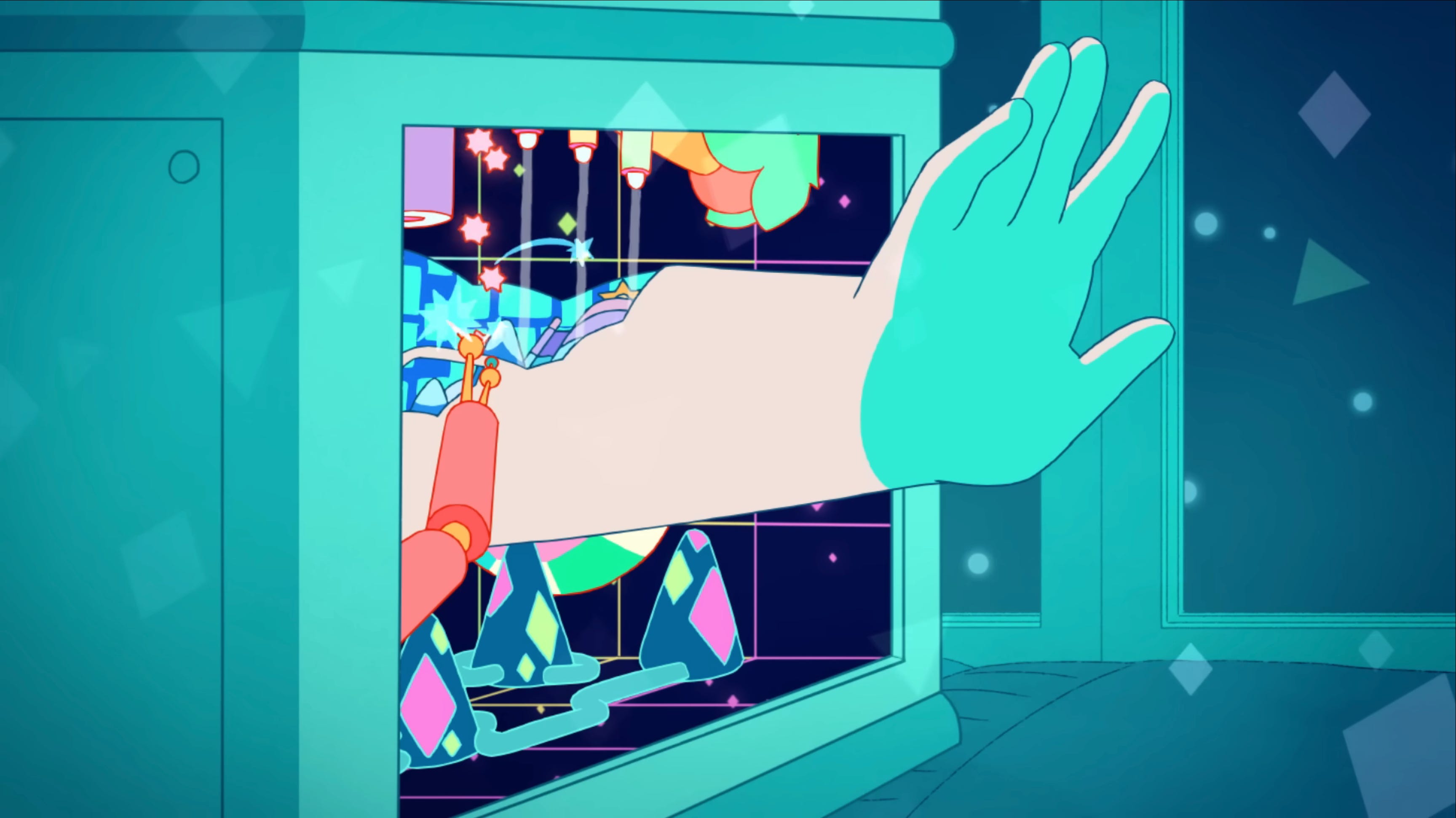
And somehow we have arrived at repair.
I wonder—
What if I am not the sum of my wounds?
What if, instead, I am the sum of my healing from them? Of living with them. Not as martyr or victim, but as a fact of life.
What if we are the sum of the love that has held us through our suffering?
Maybe we are made whole by our sutures, whether it is us or someone else holding the needle.